Luxury real estate has traditionally been measured by location, size, views, architecture and amenities.
But Dubai’s luxury residential market is beginning to add another dimension:
How does the property contribute to the way you live?
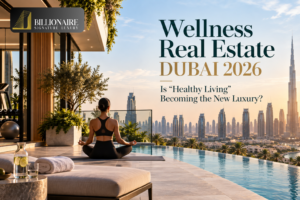
That question is helping drive a new category of real estate: wellness real estate.
Instead of treating wellness as a gym, spa or swimming pool added to a development, newer projects are integrating health, movement, nature, recovery, nutrition and wellbeing into the residential experience itself.
Knight Frank’s latest 2026 research describes this shift as wellness moving from an amenity to infrastructure, with longevity, functional medicine, nutrition, nature and personalised wellbeing increasingly influencing luxury residential design.
For Dubai, the trend is particularly relevant.
What Is Wellness Real Estate?
Wellness real estate refers to residential properties and communities designed to support healthier lifestyles through their physical environment, services and daily experiences.
That can include:
- Air and water quality systems
- Natural lighting
- Biophilic landscaping
- Fitness and movement spaces
- Recovery facilities
- Meditation and quiet spaces
- Wellness clinics
- Nutrition programmes
- Walking and cycling infrastructure
- Outdoor living
- Sleep-focused design
- Community spaces
The important distinction is that wellness is increasingly being considered during the design stage, rather than simply added as a collection of amenities.
Why Is Dubai Becoming a Wellness Real Estate Hub?
Dubai’s luxury property market has already moved beyond simply selling larger homes with more amenities.
Recent market research shows that buyers in the ultra-luxury segment are increasingly considering factors such as privacy, design quality, waterfront access, branded residences and health and wellness facilities.
At the same time, the UAE’s wellness real estate sector has expanded rapidly.
According to Global Wellness Institute data reported by Khaleej Times, UAE wellness real estate grew from approximately $3.3 billion in 2017 to $14.6 billion in 2025, with wellness real estate representing more than 12% of construction activity in the country.
That is a significant shift in what developers are building—and what affluent buyers may be looking for.
From “Luxury Amenities” to Everyday Wellness
A traditional luxury development might advertise:
Gym + pool + spa + clubhouse
The newer proposition is broader.
Imagine a residence where:
- Natural light is considered in the floor plan.
- Outdoor greenery is integrated into the development.
- Residents have dedicated spaces for movement and recovery.
- Water and air quality receive greater attention.
- Walking is encouraged through landscaped pathways.
- Quiet areas are designed for relaxation.
- Wellness services are accessible without leaving the community.
The difference is subtle but important.
The property isn’t simply providing wellness facilities.
It is trying to make healthier living easier.
Dubai’s New Wellness Residential Concepts
This isn’t just a theoretical trend.
Dubai is already seeing projects built around specialised wellness concepts.
For example, Arada’s Inaura Downtown Dubai combines hospitality and branded residences around what it calls “kinetic wellness”—integrating movement and wellbeing into the architecture and daily experience. The project includes 114 branded residences alongside a hotel component.
Other luxury developments are going further into longevity and health optimisation.
Knight Frank highlights Six Senses The Palm, where a 60,000 sq ft wellness club is planned with a longevity clinic, IV lounge and biohacking room.
This represents a significant change in luxury property positioning.
The selling point is no longer simply:
“Look at the view.”
It increasingly becomes:
“Look at the way you can live here.”
What Should Investors Look For?
For investors, wellness real estate creates an important challenge.
Not every property with a yoga studio and a landscaped garden is genuinely a wellness asset.
The difference lies in depth and execution.
1. Is Wellness Built Into the Design?
Look beyond the amenities list.
Consider:
- Building orientation
- Natural light
- Ventilation
- Acoustics
- Green space
- Walkability
- Outdoor areas
- Privacy
These characteristics can be much harder to add after construction.
2. Are the Wellness Facilities Actually Useful?
A large spa may look impressive in a brochure.
But investors should ask:
Who operates it?
How will it be maintained?
Is access included?
What are the ongoing costs?
Will residents actually use it?
The quality of the operating model matters as much as the physical facility.
3. Does the Location Support the Concept?
A wellness-oriented property should still work as real estate.
Location remains important.
Dubai’s established luxury communities continue to attract buyers because of their combination of connectivity, lifestyle infrastructure and scarcity. Bayut’s H1 2026 data shows strong buyer interest across established luxury destinations including Palm Jumeirah, Bluewaters Island, Al Barari, Dubai Marina and Dubai Hills Estate.
Wellness should therefore strengthen the underlying asset, not distract from its fundamentals.
4. Is There a Real Target Market?
Wellness-led properties may appeal particularly to:
- High-net-worth individuals
- Entrepreneurs
- International executives
- Family offices
- Long-term residents
- Health-conscious families
- Buyers seeking lifestyle-focused second homes
Understanding the likely end user is essential.
A highly specialised wellness concept needs a sufficiently deep market.
Wellness Could Change How Luxury Property Is Valued
For decades, luxury property value has revolved around relatively familiar metrics:
Location.
Price per square foot.
Views.
Bedrooms.
Amenities.
Brand.
Wellness introduces another layer.
Consider two similar properties.
Property A has a conventional gym, pool and clubhouse.
Property B has advanced fitness facilities, wellness programming, landscaped walking areas, improved environmental systems and access to specialist health services.
If buyers consistently value those features, they could influence:
- Rental demand
- Resale appeal
- Occupancy
- Buyer demographics
- Pricing
- Long-term differentiation
That does not mean every wellness property will outperform.
It means wellness is becoming another factor investors may need to evaluate.
The Difference Between Wellness Marketing and Wellness Design
This distinction will become increasingly important.
A property can market itself as “wellness-focused” because it has:
- A yoga room
- A gym
- A swimming pool
- Green landscaping
But genuine wellness-oriented design can go much deeper.
It can involve:
Air → Water → Light → Acoustics → Movement → Nature → Nutrition → Recovery → Community
Knight Frank’s latest research argues that the sector is moving in precisely this direction, with wellness becoming part of the underlying structure of luxury residential developments rather than simply another amenity.
For investors, that creates an important due-diligence question:
Is wellness actually engineered into the asset, or simply marketed around it?
Does Wellness Create an Investment Premium?
This is where caution is important.
A wellness feature does not automatically justify a higher purchase price.
Investors should compare the property with similar conventional assets and examine:
- Purchase price
- Service charges
- Rental potential
- Comparable transactions
- Resale liquidity
- Future competing supply
- Operating costs
- Developer track record
- Quality of execution
The objective should be to understand whether the wellness proposition creates real differentiation.
This is similar to evaluating any other premium residential asset.
BSL’s Private Office Advisory service is designed around evaluating high-value property opportunities through factors such as asset quality, positioning and long-term investment considerations.
Why This Trend Matters Beyond 2026
Wellness real estate is part of a broader change in luxury consumption.
Affluent buyers increasingly have access to premium products almost everywhere.
What becomes harder to buy is:
Time. Privacy. Health. Convenience. Nature. Community.
That changes the meaning of luxury.
A larger apartment provides more space.
A waterfront apartment provides a view.
A branded residence provides a service ecosystem.
A wellness-oriented residence attempts to provide something more fundamental:
a better everyday environment.
That could become one of the defining themes of Dubai’s next luxury residential cycle.
What Should Buyers Ask Before Investing?
Before purchasing a wellness-focused property in Dubai, investors should ask:
- What wellness features are actually included?
- Which features are operational today?
- Who manages the wellness facilities?
- What are the annual service costs?
- Are health or longevity services genuinely available?
- How does the property’s design support natural light, air, water and movement?
- Who is the target buyer?
- What comparable properties exist nearby?
- How much of the asking price reflects the wellness premium?
- What happens if the wellness operator changes?
These questions help separate a wellness asset from a property with a wellness-themed brochure.
Final Thoughts
Dubai’s luxury real estate market is entering a phase where quality of life itself is becoming part of the property proposition.
Wellness is moving beyond gyms and spas into architecture, landscaping, services, nutrition, recovery and community design. Current research suggests that this shift is already influencing the development of luxury residences globally and particularly in the UAE.
For investors, the opportunity is not simply to find a property with the word wellness attached to it.
It is to identify assets where wellness is genuine, useful, operationally credible and supported by strong underlying real estate fundamentals.
Because the next definition of luxury may not be how much property you own.
It may be how much better that property allows you to live.
FAQs
What is wellness real estate in Dubai?
Wellness real estate refers to residential properties designed around health and wellbeing, incorporating elements such as nature, fitness, air and water quality, recovery, nutrition and healthy lifestyle infrastructure.
Is wellness real estate growing in Dubai?
Yes. Dubai and the wider UAE are seeing increased development of wellness-focused residential concepts. The UAE’s wellness real estate sector grew significantly between 2017 and 2025, according to Global Wellness Institute data reported by Khaleej Times.
What features should I look for in a wellness property?
Look beyond gyms and spas. Consider natural light, air quality, water systems, acoustics, green space, walkability, fitness, recovery facilities, privacy and the quality of wellness services.
Does wellness increase property value?
It can contribute to differentiation and buyer appeal, but there is no automatic premium. Investors should compare the property’s pricing, operating costs, rental performance and resale potential against comparable assets.
Is wellness real estate suitable for investors?
It can be, particularly for investors interested in differentiated luxury residential assets. However, the specific development, location, pricing, operator and long-term demand should be evaluated individually.