
Every conversation about Dubai real estate eventually comes down to the same number: ROI. You will hear figures like “6-10% returns” repeated in brochures, at property exhibitions, and across social media. But very few people explain what those numbers actually mean, how they are calculated, and how achievable they are for different types of investors in different parts of the market.
This guide gives you the honest picture so you can evaluate opportunities with accuracy rather than optimism.
What ROI Actually Means in Dubai Real Estate
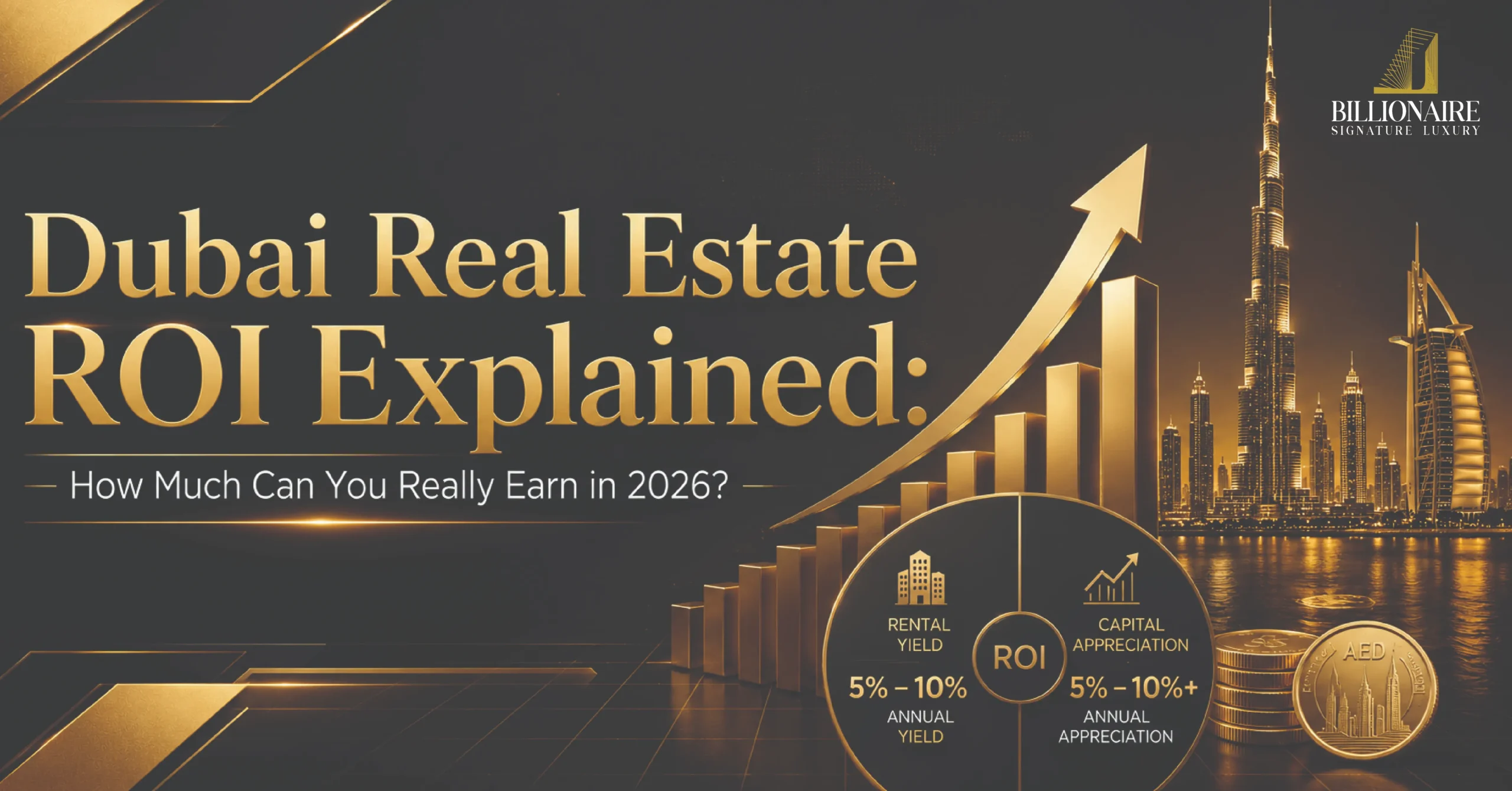
Return on investment in property comes from two distinct sources that behave very differently and need to be understood separately.
The first is rental yield, which is your annual rental income expressed as a percentage of your total investment. This is the income your property generates while you hold it, and it is the metric most relevant for investors focused on cash flow.
The second is capital appreciation, which is the increase in the market value of your property over time. This is a return that you only realise when you sell, and it is more difficult to predict accurately than yield because it depends on market conditions at your exit date.
The most sophisticated investors in Dubai track both, understand both, and make decisions based on both rather than focusing exclusively on one.
Realistic Rental Yields in 2026
In standard residential properties across Dubai’s investment-grade communities, rental yields currently average between 5% and 10% depending on location, property type, and rental strategy.
Mid-market communities like Jumeirah Village Circle, Business Bay, and Dubai Silicon Oasis consistently deliver yields at the higher end of this range, often 7-9%, because they serve a large tenant pool of young professionals and families at accessible rent levels with strong occupancy.
Premium areas like Downtown Dubai and Dubai Marina typically deliver 6-8%, slightly lower in percentage terms because entry prices are higher, but still significantly above equivalent global markets and with the benefit of stronger capital appreciation and better liquidity at exit.
Luxury villa communities like Palm Jumeirah and Emirates Hills deliver lower gross yields of 4-7%, but the tax-free nature of those yields and the strong appreciation trajectory of those assets means the total return picture remains compelling for longer-horizon investors.
What Capital Appreciation Has Actually Looked Like
Dubai villa prices rose significantly through 2024 and into 2025, with some ultra-prime areas on Palm Jumeirah seeing value increases of 30% or more over two years. Across the broader market, price per square foot rose 12.5% year on year to reach AED 1,759 in Q1 2026.
For off-plan investors who entered projects at launch pricing two to three years ago, many have seen their investment appreciate 20-30% before they even receive the keys. This leveraged appreciation, achieved on a fraction of the total purchase price through developer payment plans, is one of the most powerful return mechanics in Dubai’s market.
Going forward, analysts project annual price appreciation of 5-10% in prime areas and potentially higher in well-positioned emerging communities through to 2030.
The Critical Variables That Determine Your Actual Return
Location is the dominant variable. Two properties at identical prices in different locations can deliver yields that differ by three or four percentage points annually.
Property type matters significantly. Studios and one-bedroom apartments in high-demand communities typically deliver higher percentage yields than larger units, because they serve the largest segment of the rental market. Villas deliver lower percentage yields but stronger appreciation.
Your rental strategy shapes your income. Long-term tenants provide predictability and lower management intensity. Short-term rentals through platforms like Airbnb can deliver materially higher income in the right locations but require active management or a professional operator.
Your entry price determines everything that follows. A property acquired below market value starts with an embedded gain. A property acquired above market value has to appreciate before it reaches genuine profitability.
How to Actually Maximise Your ROI
Start with entry price. Disciplined acquisition at the right price is the single most powerful determinant of long-term return.
Choose high-demand locations over prestige locations unless you have a specific appreciation strategy. Demand drives yield. Prestige drives marketing.
Consider your rental strategy before you buy. If a property is in the right location for short-term letting and you have the management structure to support it, this can meaningfully improve your income return.
Build a diversified portfolio over time. Income assets and appreciation assets serve different roles and balance each other across market cycles.
Why BSL Group UAE Helps You Earn More
At BSL Group UAE, every property recommendation we make is built on ROI analysis before any other consideration. We identify assets that deliver genuine yield, in genuine demand locations, at defensible entry prices. And we manage them actively to ensure the returns the market makes possible are the returns our clients actually receive.
If you want to understand what real returns in Dubai look like for your specific situation, we are ready to have that conversation.