Branded residences have become an increasingly visible part of Dubai’s luxury property market. Combining residential ownership with the identity, design standards or services of a recognised hospitality or lifestyle brand, these developments attract international buyers and investors seeking a distinctive property experience.
However, one important question often gets overlooked: Are branded residences freehold in Dubai?
The answer depends on the specific property and its registered ownership structure. A prestigious hotel or lifestyle brand does not automatically make a residence freehold. Buyers must examine the property’s location, legal ownership rights and registration documents before making an investment decision.
This guide explains how freehold ownership works for branded residences in Dubai, what foreign buyers should verify and which documents deserve particular attention before signing a purchase agreement.
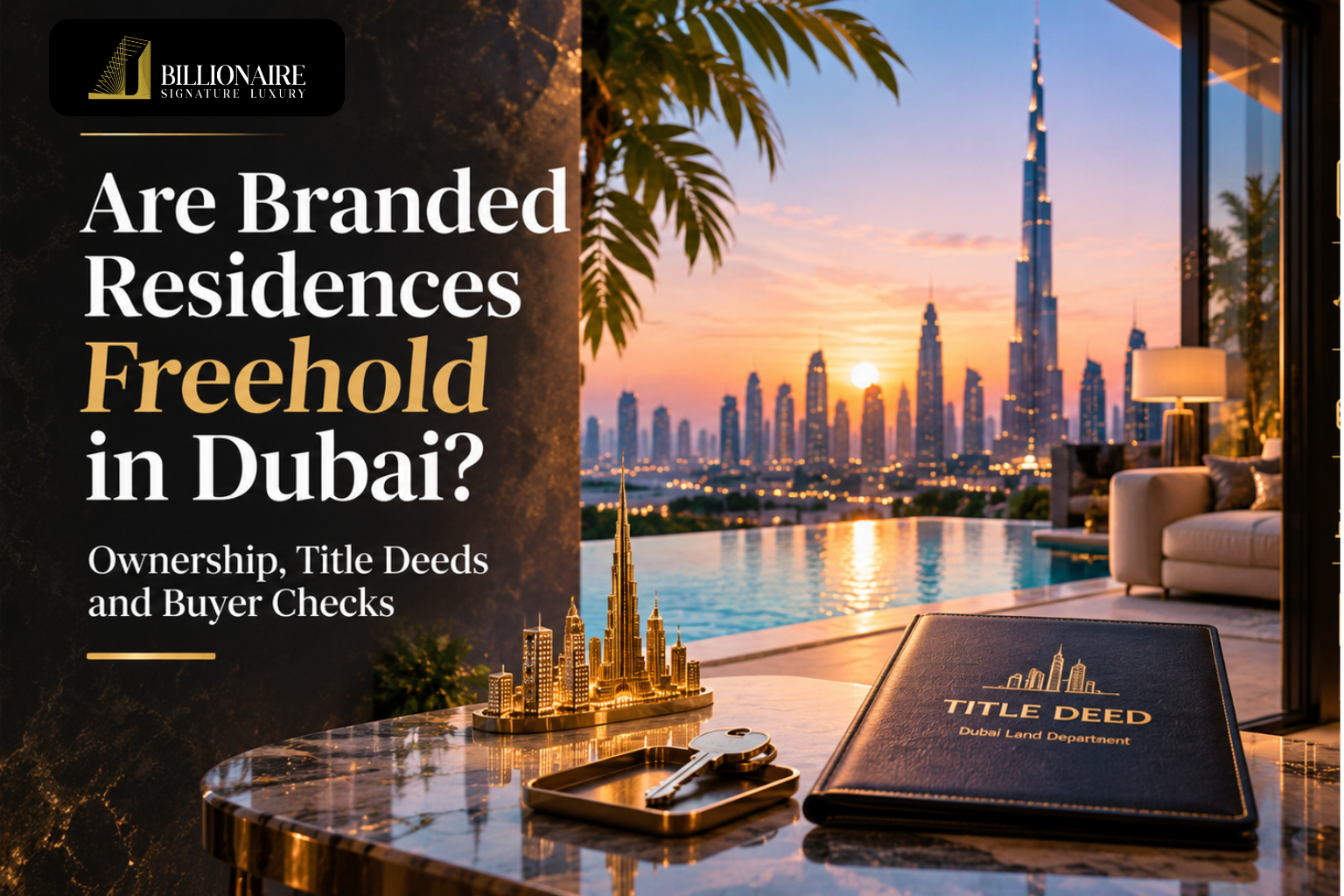
1. Are Branded Residences Freehold in Dubai?
Yes, branded residences in Dubai can be freehold, provided the property is located in an area where the relevant buyer is legally permitted to acquire freehold ownership.
Dubai’s property ownership framework distinguishes between different ownership rights, including:
- Freehold: Ownership without a fixed time restriction, subject to applicable laws and registration.
- Leasehold: The right to use a property for an agreed period, generally up to 99 years under the relevant Dubai framework.
- Usufruct: A registered right to use and benefit from a property belonging to another owner, subject to the terms and applicable law.
Under Dubai Law No. 7 of 2006 and Regulation No. 3 of 2006, non-UAE nationals may acquire freehold ownership in designated areas. They may also acquire certain usufruct or leasehold rights where permitted.
The important point is that the brand attached to a development does not determine its ownership tenure.
A branded apartment in a designated freehold area may offer freehold ownership. Another property marketed under a premium hospitality brand may have a different ownership arrangement.
Buyers must verify the legal position of the individual property rather than relying on its branding or marketing description.
2. Does a Luxury Brand Guarantee Freehold Ownership?
No. A recognised hotel, fashion, automotive or lifestyle brand does not guarantee that a residence is freehold.
Brand partnerships generally relate to aspects such as:
- Interior design and architectural identity.
- Hospitality and residential services.
- Property management arrangements.
- Access to selected lifestyle facilities.
- Brand standards and operating requirements.
These features are separate from the legal ownership rights attached to the property.
For example, a branded residence may be located within a freehold development but have additional operating or management obligations under its agreements.
Before purchasing, buyers should establish exactly what they are acquiring:
- Is the property freehold, leasehold or subject to another registered right?
- Is the buyer acquiring an individual residential unit?
- What rights are included in the registered ownership?
- Are there restrictions on occupancy, leasing or resale?
- Does the brand agreement impose additional obligations?
The distinction between the branded experience and the legal ownership structure is essential when evaluating a luxury property investment.
3. Can Foreign Investors Buy Branded Residences Freehold in Dubai?
Foreign investors, including buyers who do not reside in the UAE, can acquire freehold property in designated areas of Dubai.
The right to purchase depends on the location and applicable ownership regulations, not the buyer’s nationality alone or the property’s brand.
Dubai’s designated ownership areas include well-known locations such as:
- Downtown Dubai.
- Palm Jumeirah.
- Dubai Marina.
- Business Bay.
- Jumeirah Beach Residence.
- Jumeirah Lakes Towers.
The exact eligibility of a property must still be verified through the relevant land and property records.
Foreign buyers should also check whether the proposed purchaser is an individual or a company. Dubai Land Department guidance recognises that eligible foreign-owned companies may register properties in designated areas, subject to applicable requirements.
For international investors, this makes ownership verification an important early stage of the acquisition process.
4. What Is the Difference Between Freehold and Leasehold Branded Residences?
The distinction affects the nature and duration of the rights acquired by a buyer.
| Consideration | Freehold | Leasehold |
|---|---|---|
| Ownership interest | Ownership without a fixed time limit | Right for an agreed period |
| Duration | No fixed expiry under the ownership right | Contractually defined period |
| Resale | Subject to applicable laws and restrictions | Subject to the lease terms and applicable rules |
| Inheritance | Governed by applicable succession and registration rules | Depends on the nature and remaining term of the right |
| Buyer consideration | Title, restrictions and obligations | Lease duration, renewal and termination terms |
For a branded residence, buyers should also examine whether the property has management agreements, hospitality obligations, rental-pool arrangements or restrictions on personal use.
A freehold title does not necessarily mean unrestricted use of every facility or service associated with a branded development.
5. What Documents Should Buyers Check Before Purchasing?
The legal and commercial documents provide a clearer picture of what the buyer is actually acquiring.
Before committing to a branded residence in Dubai, review the following.
A. Title deed or ownership registration
For a completed property, verify the registered ownership information and the rights associated with the unit.
The Dubai Land Department is the legally authorised entity responsible for registering and documenting real estate transactions.
B. Sale and Purchase Agreement
Review the agreement carefully, particularly:
- Property identification and unit details.
- Purchase price and payment schedule.
- Completion and handover obligations.
- Developer responsibilities.
- Cancellation and default provisions.
- Assignment and resale conditions.
C. Brand and management agreements
Branded developments may have agreements governing the use of the brand, operation of facilities and management of the property.
Buyers should understand:
- Whether management is mandatory.
- Whether personal occupation is permitted.
- Whether the unit can be rented independently.
- Whether participation in a rental programme is optional.
- What fees and service obligations apply.
- How long the brand or management agreement remains in effect.
These details can influence both the ownership experience and the property’s investment economics.
D. Service charges and operating expenses
Luxury facilities and hospitality services can involve higher recurring expenses.
Request a clear breakdown of applicable service charges, management fees, maintenance costs and any additional contractual payments.
E. Developer and project registration
For off-plan purchases, verify the project’s registration and relevant approvals.
Dubai’s investor guidance recommends checking project registration, escrow arrangements, construction progress, developer registration and required permissions before purchasing off-plan property.
A buyer should not rely solely on brochures, launch presentations or sales assurances.
6. Does Freehold Ownership Mean You Can Rent or Resell the Property Freely?
Not necessarily.
Freehold ownership establishes the nature of the property right, but other contractual, regulatory and operational conditions may affect how the residence can be used.
For branded residences, buyers should pay particular attention to:
Rental restrictions: Some developments may have specific rules governing short-term rentals, long-term leases or participation in managed rental programmes.
Management obligations: The building or brand operator may have contractual responsibilities and operational rules that owners must follow.
Resale conditions: Certain agreements may require clearances, documentation or developer procedures before a transfer can be completed.
Personal occupation: Some branded hospitality developments may impose conditions on owner use, particularly where rental operations form part of the business model.
The buyer should review the sale agreement, community rules and management documents before assuming that freehold ownership provides complete operational flexibility.
7. How Does Ownership Structure Affect Branded Residence Investment Returns?
A branded residence should be evaluated on its investment fundamentals, not just its brand association.
Ownership terms can influence the property’s costs, flexibility and potential resale market.
Consider these factors:
Total acquisition cost
Calculate the purchase price alongside registration charges, transaction expenses and other applicable costs.
Annual ownership expenses
Include service charges, management fees, maintenance and any mandatory brand-related expenses.
Rental income assumptions
If the property is intended for investment, assess realistic rental income after considering occupancy, operating costs and any revenue-sharing arrangements.
Personal-use restrictions
A residence with limited owner occupancy may appeal to a different buyer profile than a conventional luxury apartment.
Resale potential
Consider whether future buyers will accept the same management obligations, fees and contractual restrictions.
The investment decision should be based on the net financial position and the legal rights attached to the property.
A strong brand can contribute to a property’s market positioning, but it does not guarantee rental income, capital appreciation or resale demand.
8. A Practical Checklist for Buying a Branded Residence in Dubai
Before proceeding with a purchase, buyers should complete the following checks:
- Confirm whether the property is freehold or leasehold.
- Verify that the location permits the proposed ownership structure.
- Check the developer and project registration.
- Review the title deed or off-plan registration documents.
- Understand the brand licensing and management arrangements.
- Confirm personal-use and rental restrictions.
- Calculate all recurring ownership expenses.
- Review resale and transfer conditions.
- Assess the property’s investment assumptions independently.
- Obtain qualified legal and financial advice before signing.
This process helps buyers distinguish between a premium property presentation and the actual rights and obligations attached to the investment.
9. How BSL Group Helps Buyers Evaluate Branded Residences in Dubai
Billionaire Signature Luxury (BSL) works with private investors, family offices and international buyers exploring selected luxury real estate opportunities across Dubai and the UAE.
Branded residences require a more detailed evaluation than simply comparing developer prices or brand names.
BSL’s advisory approach focuses on helping clients assess the commercial aspects of selected opportunities, including:
- Identifying suitable branded residential developments.
- Comparing locations and property positioning.
- Evaluating purchase costs and investment assumptions.
- Understanding management and ownership considerations.
- Coordinating discussions with relevant developers and stakeholders.
- Supporting acquisition and resale transactions.
- Exploring selected private and off-market opportunities.
Each property requires individual legal, financial and operational review. BSL’s advisory support does not replace independent legal advice or official ownership verification through the Dubai Land Department.
For investors considering a branded residence, understanding the ownership structure before committing capital is an important part of making an informed decision.
10. Make an Informed Branded Residence Investment Decision
Dubai’s branded residential market offers buyers access to properties associated with recognised hospitality and lifestyle names.
However, a luxury brand should be only one part of the investment evaluation.
The property’s ownership rights, management obligations, recurring expenses, rental conditions and resale restrictions deserve equal attention.
Whether you are purchasing a branded apartment for personal use or evaluating it as an investment, verify the legal structure and understand the complete financial commitment.
Explore Branded Residence Opportunities with BSL Group
Billionaire Signature Luxury helps private investors and international buyers explore selected luxury real estate opportunities across Dubai.
Connect with the BSL team to discuss branded residences, premium developments and private property investment opportunities.
Website: https://bslgroupuae.com/
Contact: https://bslgroupuae.com/contact/
Frequently Asked Questions
1. Are branded residences freehold in Dubai?
Some branded residences are freehold, provided they are located in designated ownership areas and the buyer is eligible. The ownership status must be verified for the individual property.
2. Can foreigners own branded residences in Dubai?
Yes. Foreign nationals can acquire freehold properties in designated areas of Dubai, subject to applicable regulations and registration requirements.
3. Does a branded residence automatically come with a title deed?
No. The ownership documentation depends on the property and transaction structure. Buyers should verify the relevant registration and ownership documents through the Dubai Land Department.
4. Can I rent out my branded residence in Dubai?
That depends on the property’s agreements, management arrangements and applicable regulations. Buyers should check whether independent leasing is permitted or whether a managed rental programme applies.
5. Are branded residences more expensive to maintain?
They can involve additional service and management expenses depending on the facilities, services and contractual arrangements. Buyers should request a detailed breakdown before purchasing.
6. What should I check before buying a branded residence?
Verify the ownership tenure, title or registration documents, developer and project details, management agreements, service charges, rental restrictions and resale conditions.
7. Does freehold ownership guarantee capital appreciation?
No. Freehold ownership describes the nature of the ownership right. Property value depends on market conditions, location, asset quality, demand and other investment factors.